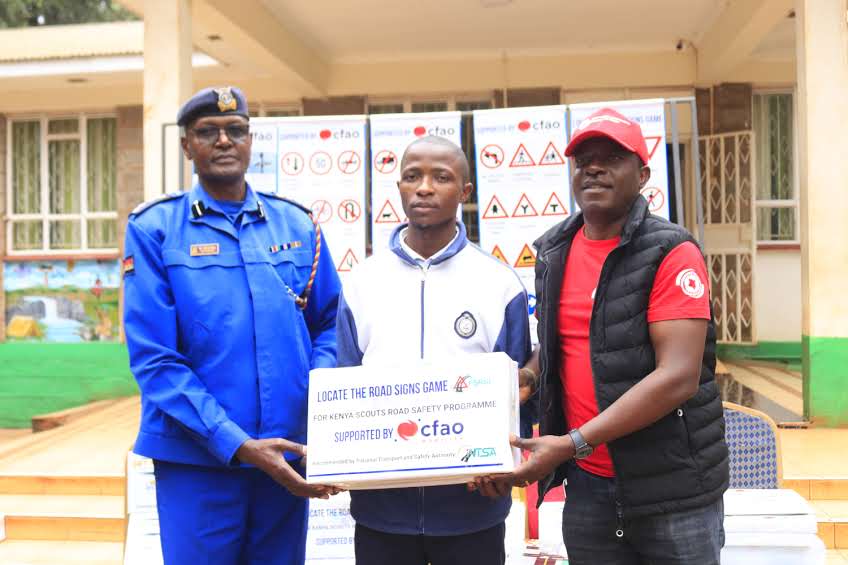
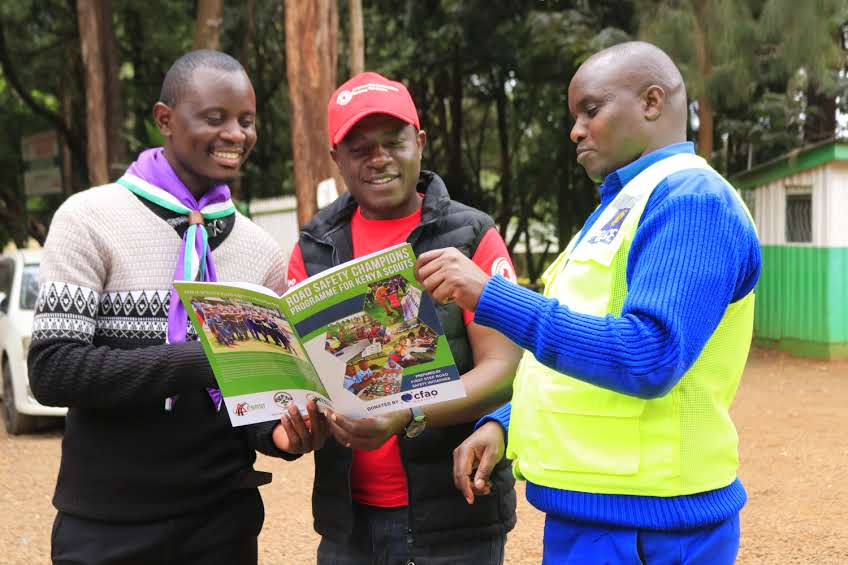
Building a Culture of Road Safety Through Scouting
The Kenya Scouts Association (KSA) is strengthening its commitment to promoting road safety by equipping Scout leaders with practical road safety knowledge through a training conducted by the National Transport and Safety Authority (NTSA) in partnership with CFAO and the First Step Road Safety Initiative – Mobility.
The training brought together Scout leaders to deepen their understanding of responsible road use, pedestrian safety, traffic rules and practical measures for protecting children and young people on the road.
The initiative recognises that road safety is a shared responsibility and that schools provide an important platform for building a culture of safe road use from an early age. NTSA has previously highlighted the importance of partnerships in delivering road safety education to school-going children through the KSA’s structured presence in schools which provides an effective channel for reaching young people across the country.
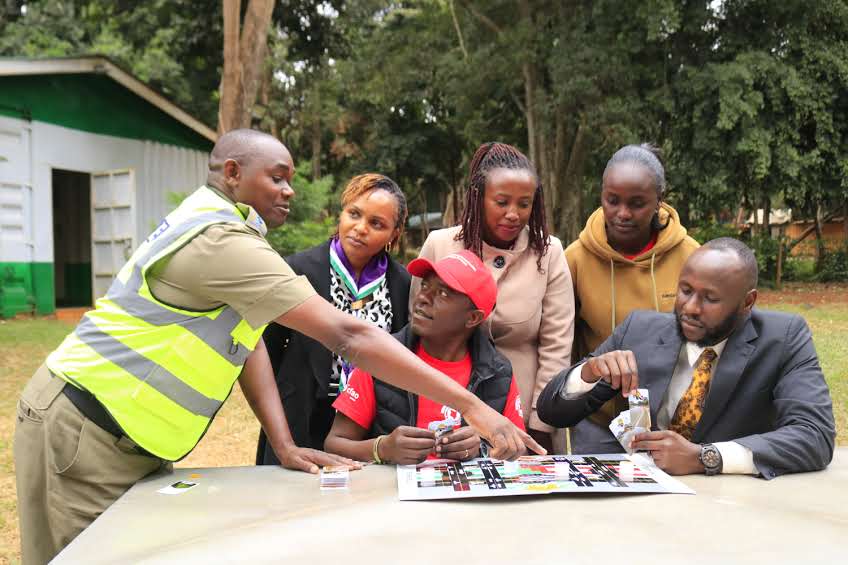
The collaboration also complements national efforts to strengthen road safety education in schools. Kenya has been integrating road safety into the school curriculum as part of broader efforts to build safer road-user behaviour among learners.
Speaking during the opening session of the training, the Chief Commissioner and Chair of the National Scout Board at the Kenya Scouts Association Shujaa Victor Radido stated that “As a Movement, we want every Scout to become a road safety champion and that with such an initiative and through the Scout Programme, a culture of responsibility, care and respect for every road user will be developed in learners at a formative age.
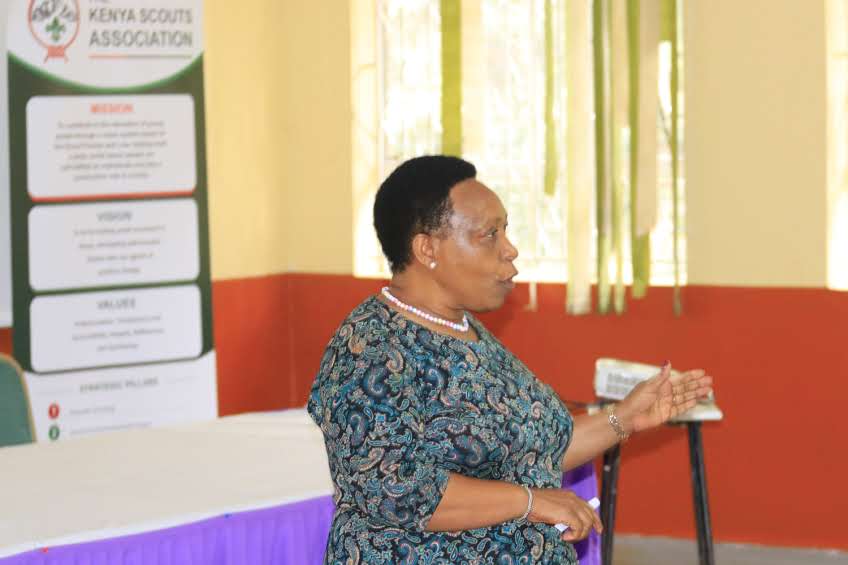
Alice Kihungi, the Deputy Chief Commissioner at KSA and also Chairperson of the Safe from Harm Team in Kenya in her remarks applauded the partnership calling upon other like minded organizations to join the call towards safeguarding of young people in and out of schools. “Safeguarding our young people goes beyond protecting them within our programmes and activities; it also means ensuring that they are safe as they move to and from school and participate in their communities. Road safety is therefore an important part of safeguarding. By equipping our Scout leaders with the right knowledge and skills, we are strengthening their capacity to identify risks, promote safe behaviour and protect the lives of the young people entrusted to their care”, she said.
”We will continue working with our partners to ensure that every Scout learns how to stay safe and becomes an advocate for safety in their school and community”, remarked Moses Danda the National Executive Commissioner at the Association stating that “through this initiative Scouts are not only beneficiaries of road safety education but are also ambassadors of safer behaviour and that as we train our leaders we are assured that they will cascade this knowledge to Scouts in their Scout Units in schools and in turn create a generation of young people who understand that saving lives on our roads is everyone’s responsibility”.
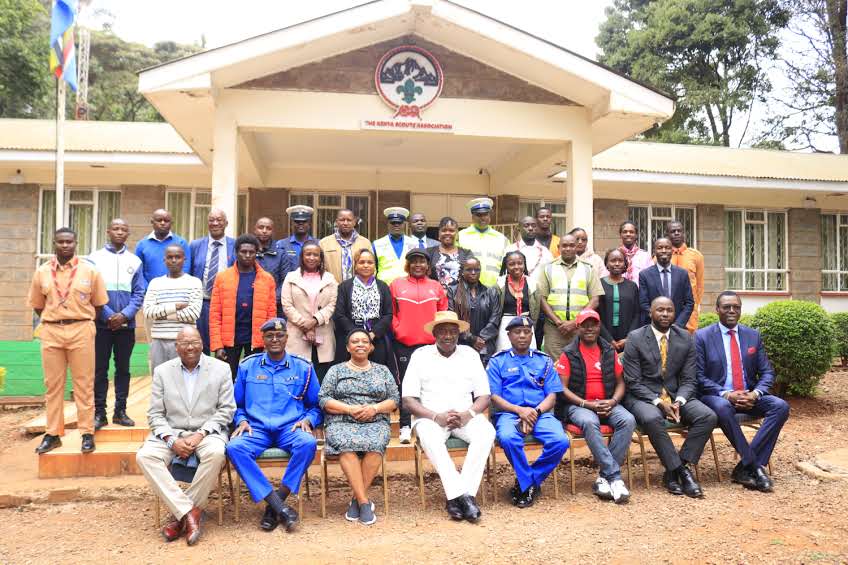
Through the training, Scout leaders were equipped to communicate key road safety practices, including understanding traffic signs and signals, safe pedestrian behaviour, responsible road use and the importance of making safe decisions when travelling to and from school.